Stage 1 of 5
Active Relaxation
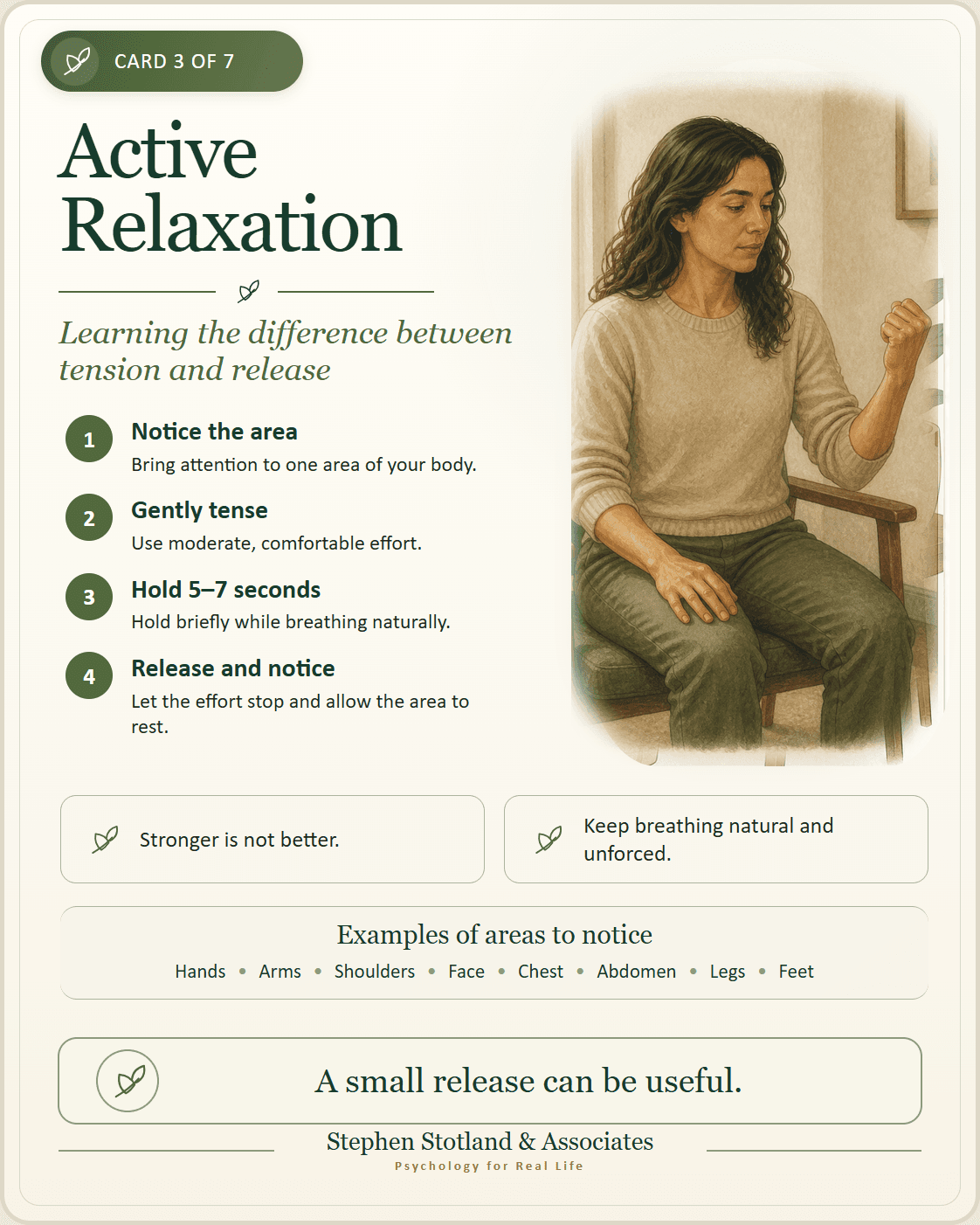
Gently tense and release different muscle groups to learn the contrast between muscular tension and release.
Go to Stage 1: Active RelaxationApplied Relaxation Training is a practical method for noticing physical tension earlier, releasing unnecessary effort when that would be helpful, and creating a brief pause before deciding what to do next.
The goal is not perfect calm or the elimination of normal emotion. A small change in the shoulders, jaw, hands, breathing, or posture may be useful, and very little immediate change does not mean that the practice was unsuccessful.
Go directly to your stageThe training begins with a longer exercise in comfortable conditions. As the method becomes familiar, you learn to release tension without first creating it, shorten the practice, use it during ordinary activities, and apply it when stress begins to rise.
You are learning a skill, not performing a test. Useful progress may include noticing tension earlier, using less physical effort, remembering the method more easily, or pausing before reacting automatically.
Each stage page keeps the illustrated reminder, complete written instructions, practice guidance, troubleshooting, and safety information together.
Stage 1 of 5
Gently tense and release different muscle groups to learn the contrast between muscular tension and release.
Go to Stage 1: Active Relaxation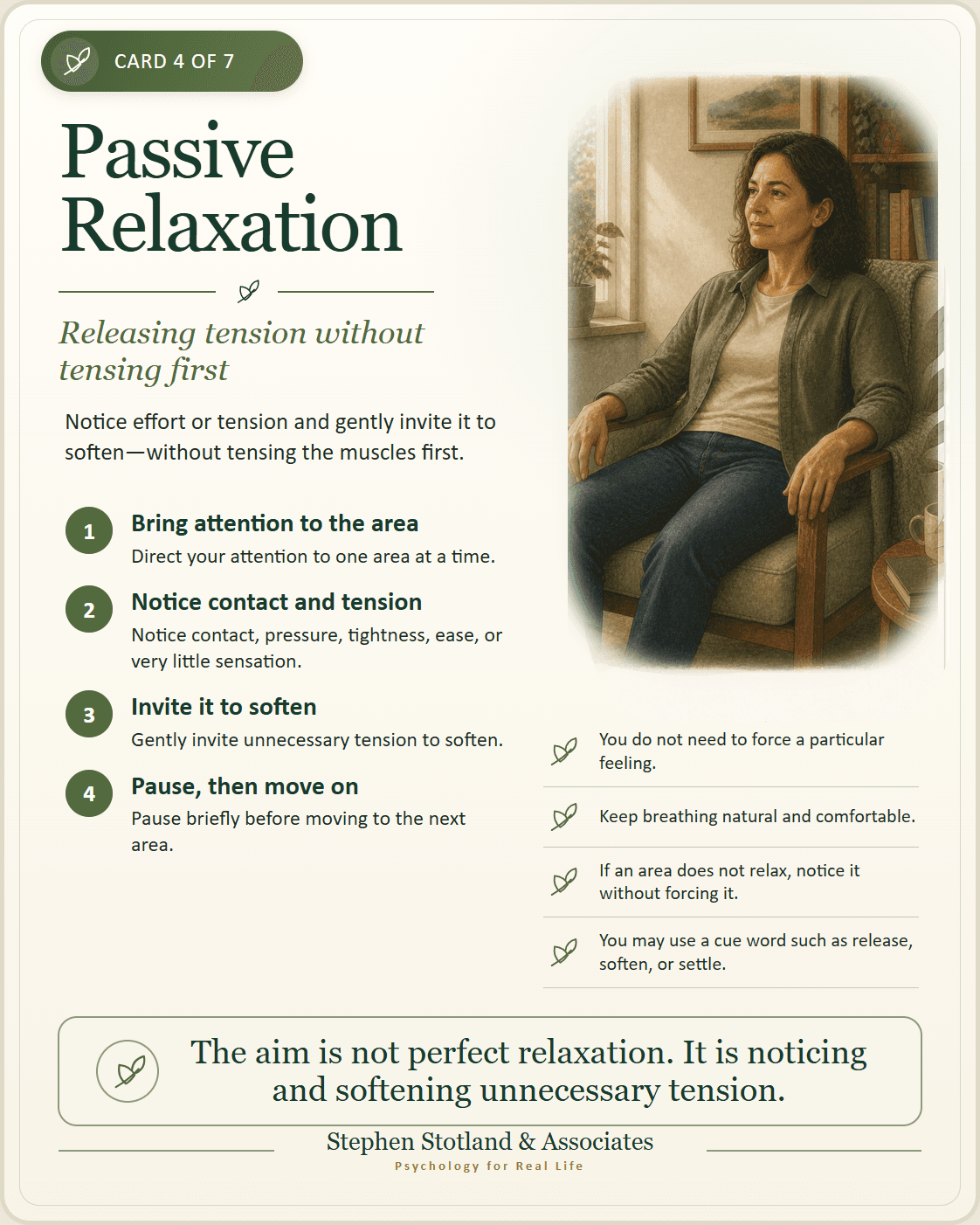
Stage 2 of 5
Move through the same body areas without tensing first, noticing effort or tension and gently inviting it to soften.
Go to Stage 2: Passive Relaxation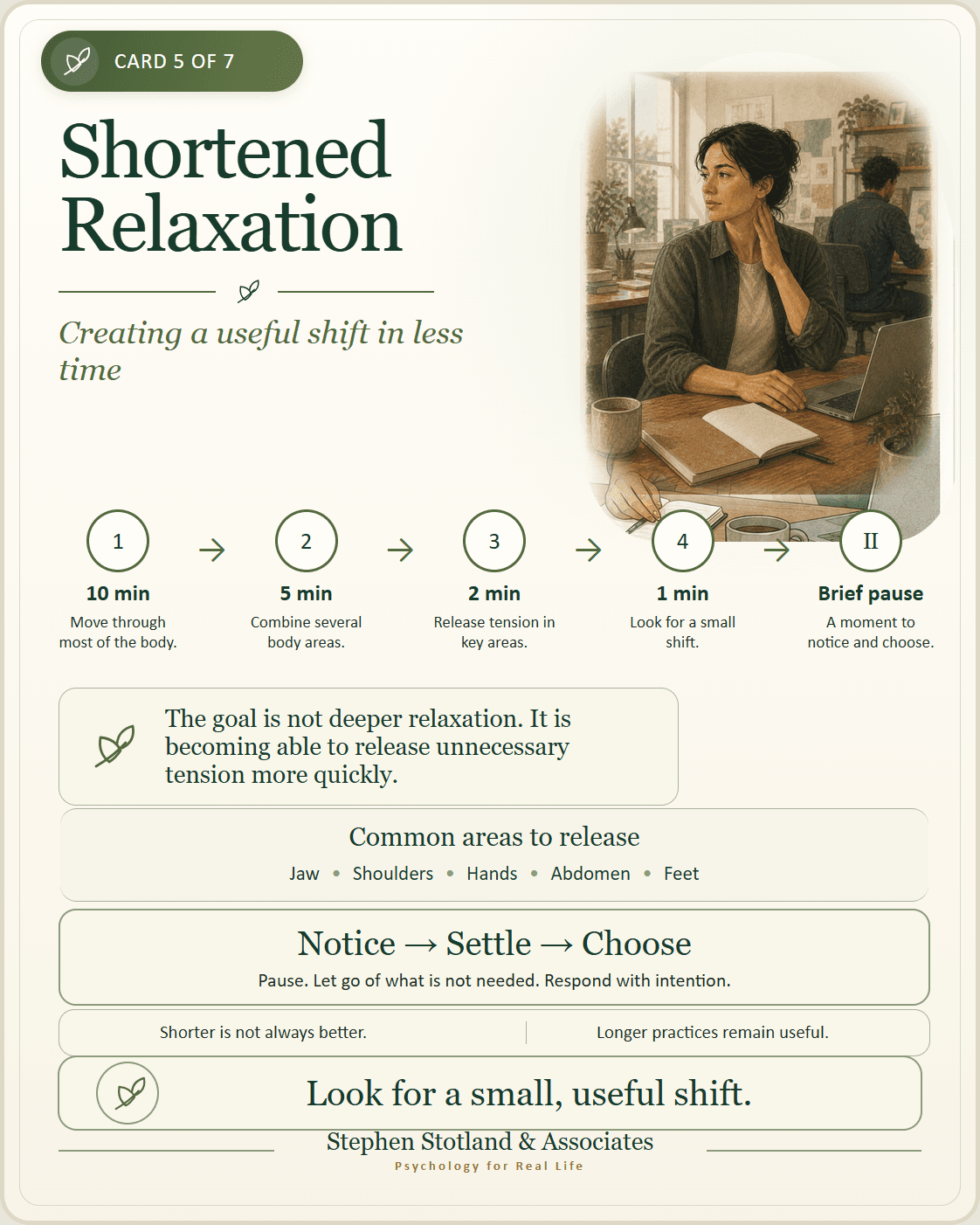
Stage 3 of 5
Use the same relaxation skills in progressively less time, looking for a small, useful shift rather than deeper relaxation.
Go to Stage 3: Shortened Relaxation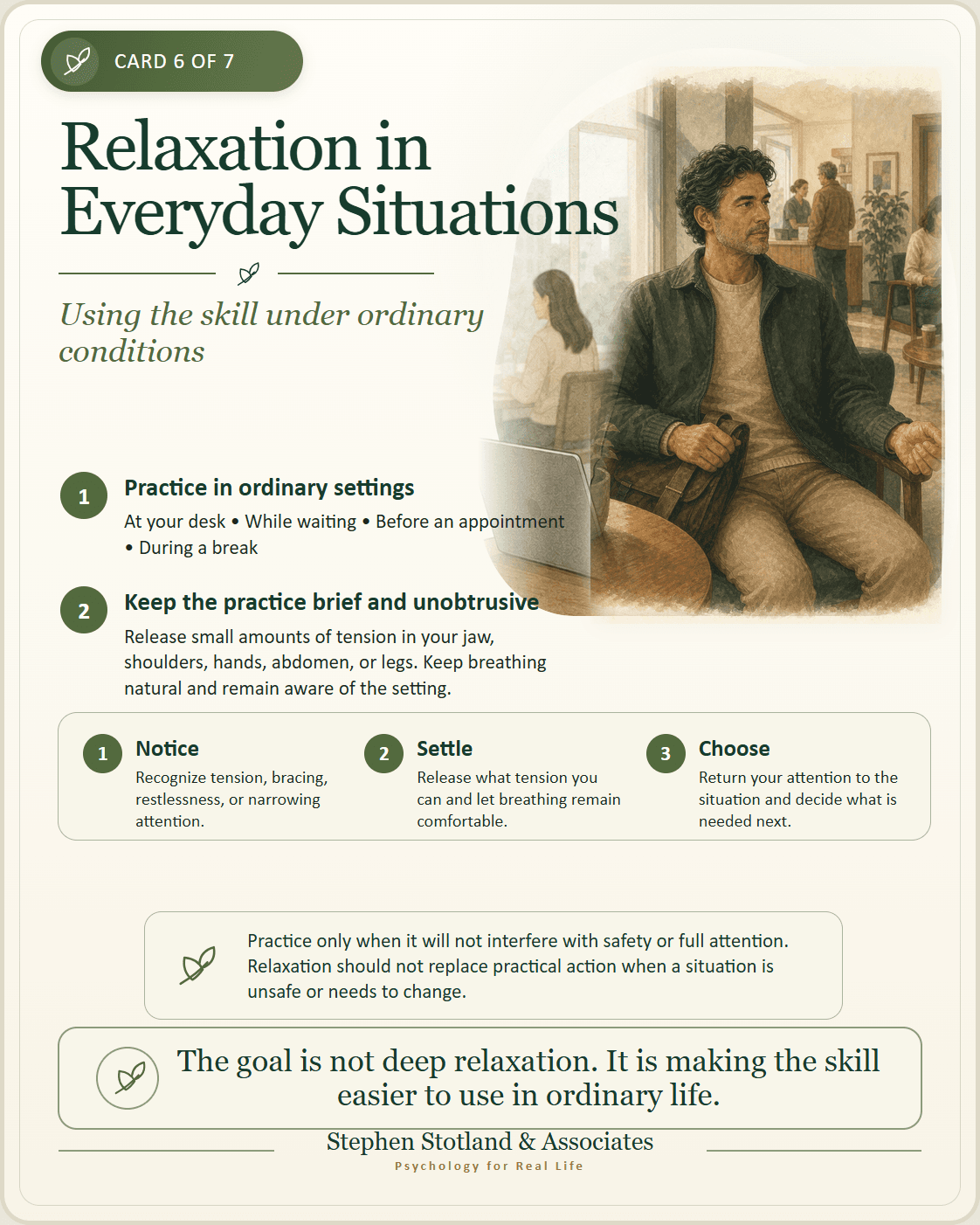
Stage 4 of 5
Practice brief, unobtrusive relaxation in ordinary, safe settings while remaining aware of the situation.
Go to Stage 4: Relaxation in Everyday Situations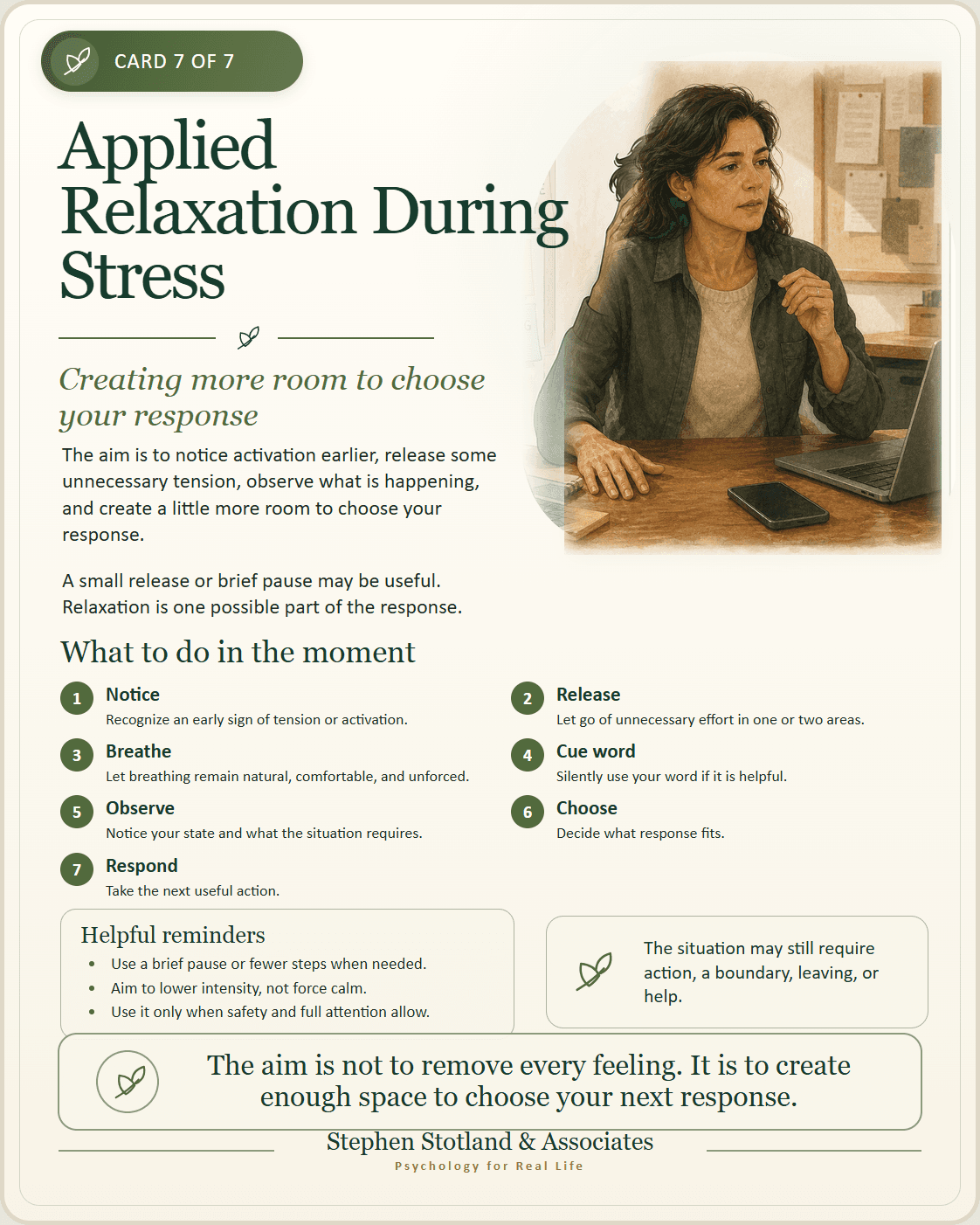
Stage 5 of 5
Use the skill when early signs of stress or activation begin to rise, creating a little more room to choose what to do next.
Go to Stage 5: Applied Relaxation During StressUse the printable, editable, or spreadsheet log to notice patterns and support discussion. The log is not a measure of success.
Each stage page includes the full instructions and its specific safety guidance.