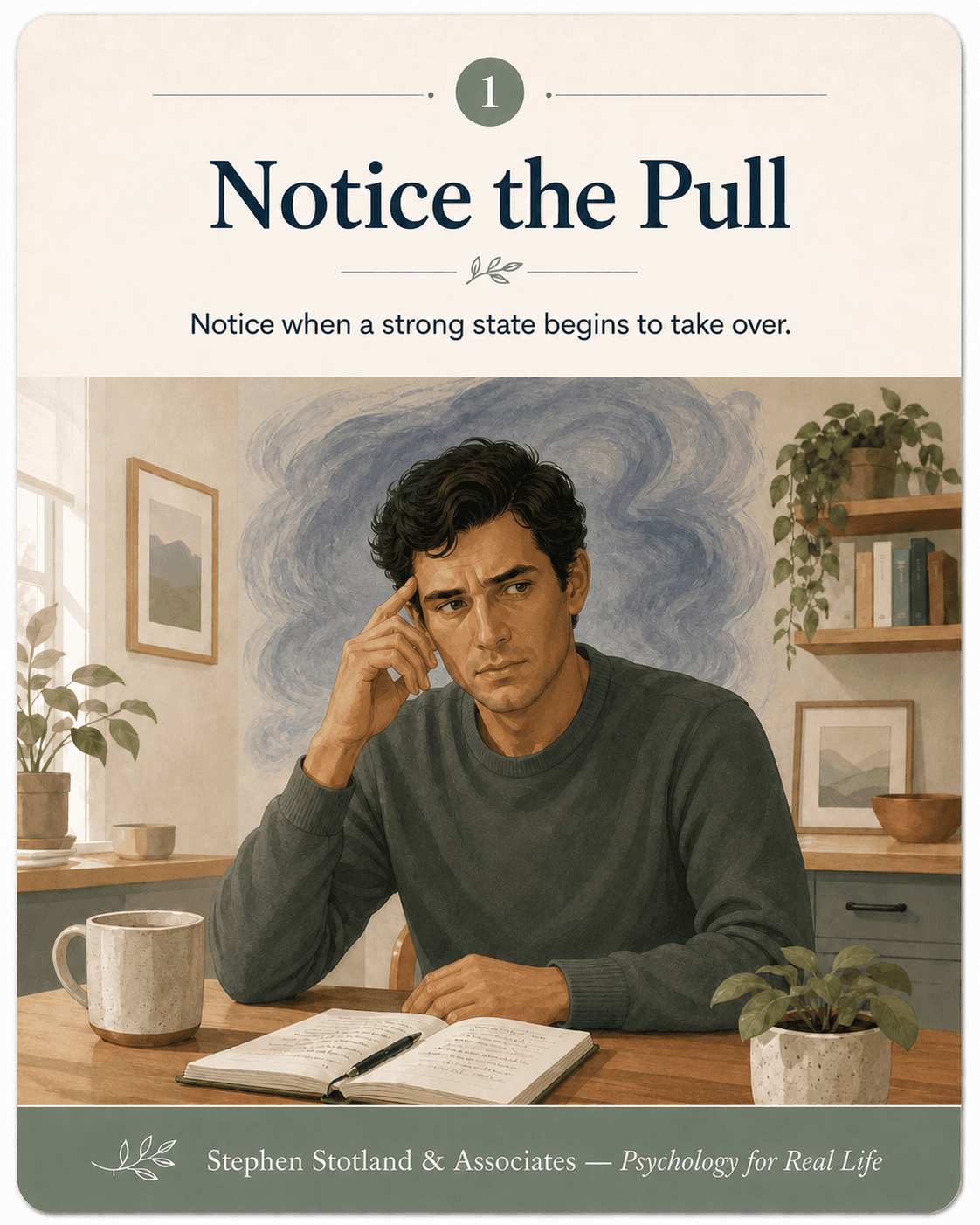
Step 1 of 4
Notice the Pull
Notice when a strong internal state is beginning to dominate awareness.
Go to Step 1: Notice the PullReconnect with what is actually happening when thoughts, feelings, sensations, memories, or urges begin to take over.
Most of us know what it is like to become caught in worry, an argument, a craving, or a wave of fear. For a while, the internal experience can seem like the whole situation.
Sometimes the pull is stronger. You may feel trapped in an earlier emotional reality, overwhelmed by panic, or disconnected from what is actually happening now—even without recalling a specific memory.
Strong thoughts, feelings, sensations, memories, or urges can narrow our attention until they feel like the whole reality. Returning to the present means widening awareness again—where you are, what is actually happening, and what choices you still have.
The state is real. It may not be the whole situation.
Notice → Reconnect → Check → Choose
Use only what helps. In an intense moment, one reconnection action and one safe choice may be enough.
Step 1 of 4
Notice when a strong internal state is beginning to dominate awareness.
Go to Step 1: Notice the Pull
Step 2 of 4
Use your surroundings, body, movement, or another person to reconnect with what is here now.
Go to Step 2: Reconnect with Here and Now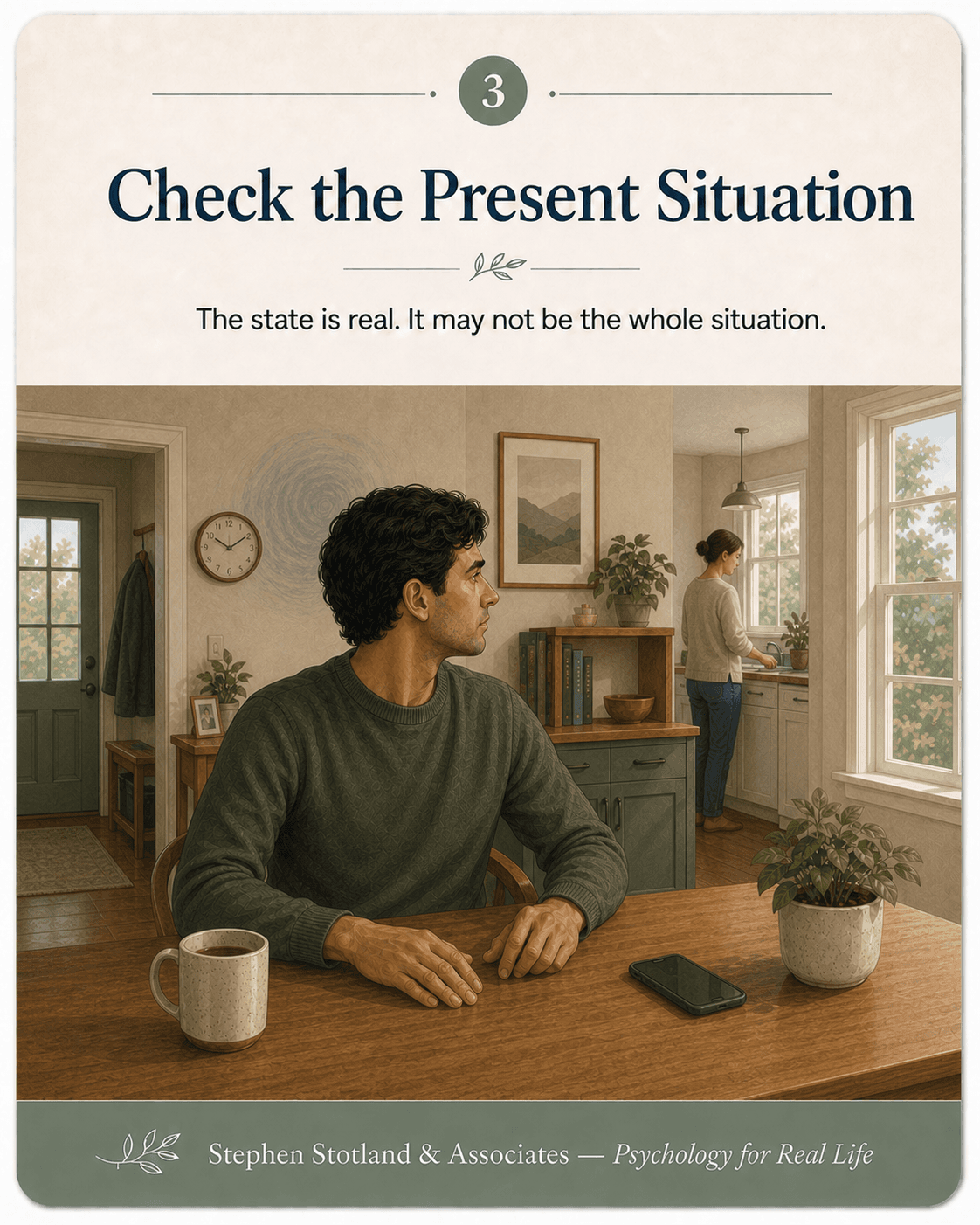
Step 3 of 4
Distinguish the strong state from the wider facts of the present.
Go to Step 3: Check the Present Situation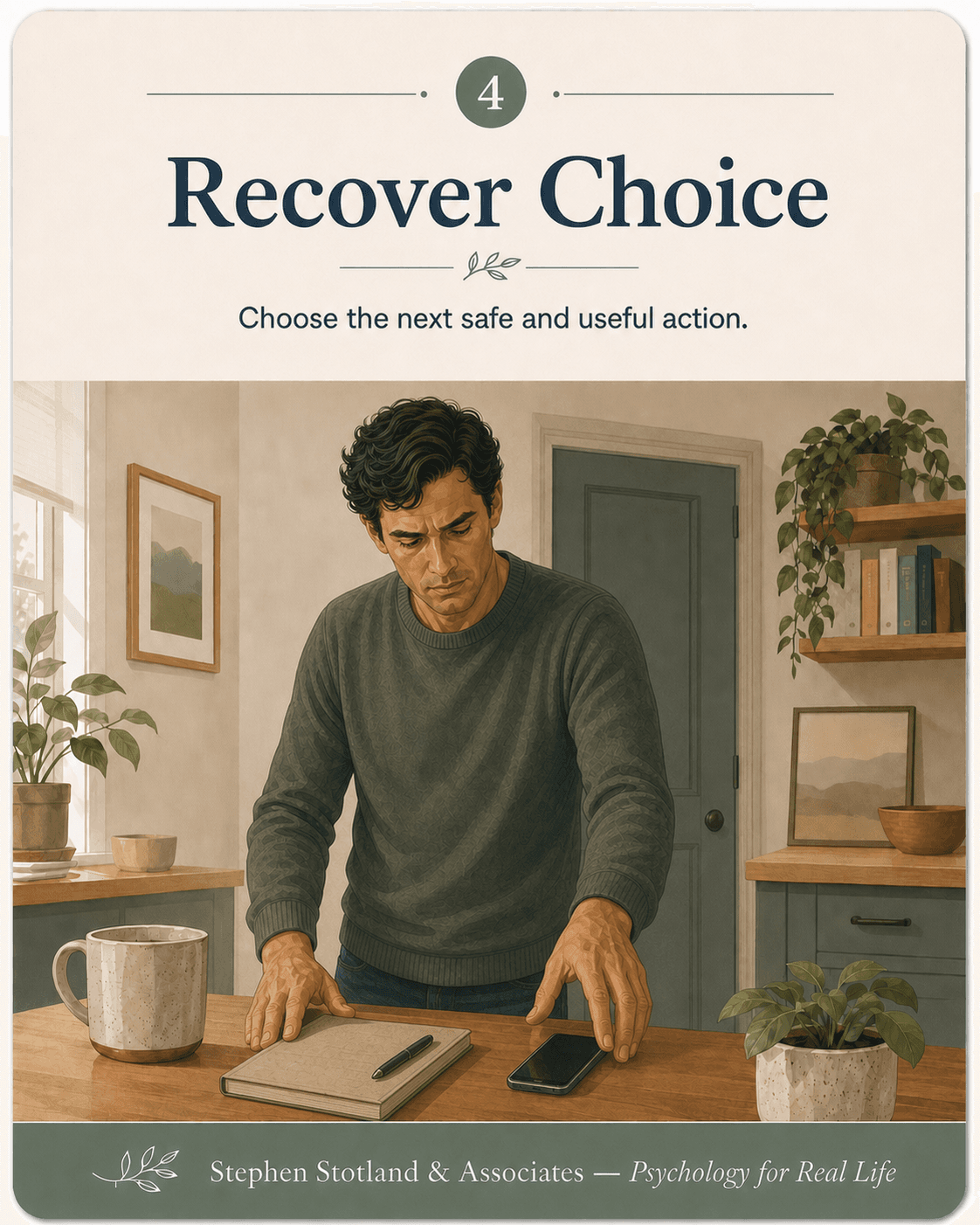
Step 4 of 4
Regain enough perspective to choose the next safe and useful action.
Go to Step 4: Recover ChoiceNotice the pull, reconnect with current place and support, check what belongs to now, and choose what increases safety.
Reconnect outwardly, check what is actually happening, and choose one useful response without waiting to feel calm.
Widen awareness beyond immediate relief, reconnect with what matters, and delay action long enough to recover choice.
Reconnect with the setting and people involved, check the wider situation, and choose rather than react immediately.
Notice when attention is caught elsewhere, reconnect with the present activity, check whether action is needed, and choose what comes next.
Identify your early signs, reliable ways to reconnect, supportive people or places, and the next safe action. A brief optional log is included.
Helps you reconnect when a strong state is taking over.
Helps you observe an experience without being carried away by it.
Helps reduce unnecessary physical arousal.
When you are being pulled away from the present, first reconnect. When you can remain present without being overwhelmed, you may begin to observe the experience more openly.
Keep your eyes open, use external sights and sounds, move, contact another person, or change settings when inward attention is destabilizing.
Presence should help you become more oriented and connected, not less.
Print the complete resource or download a polished guide and reusable practice workbook.