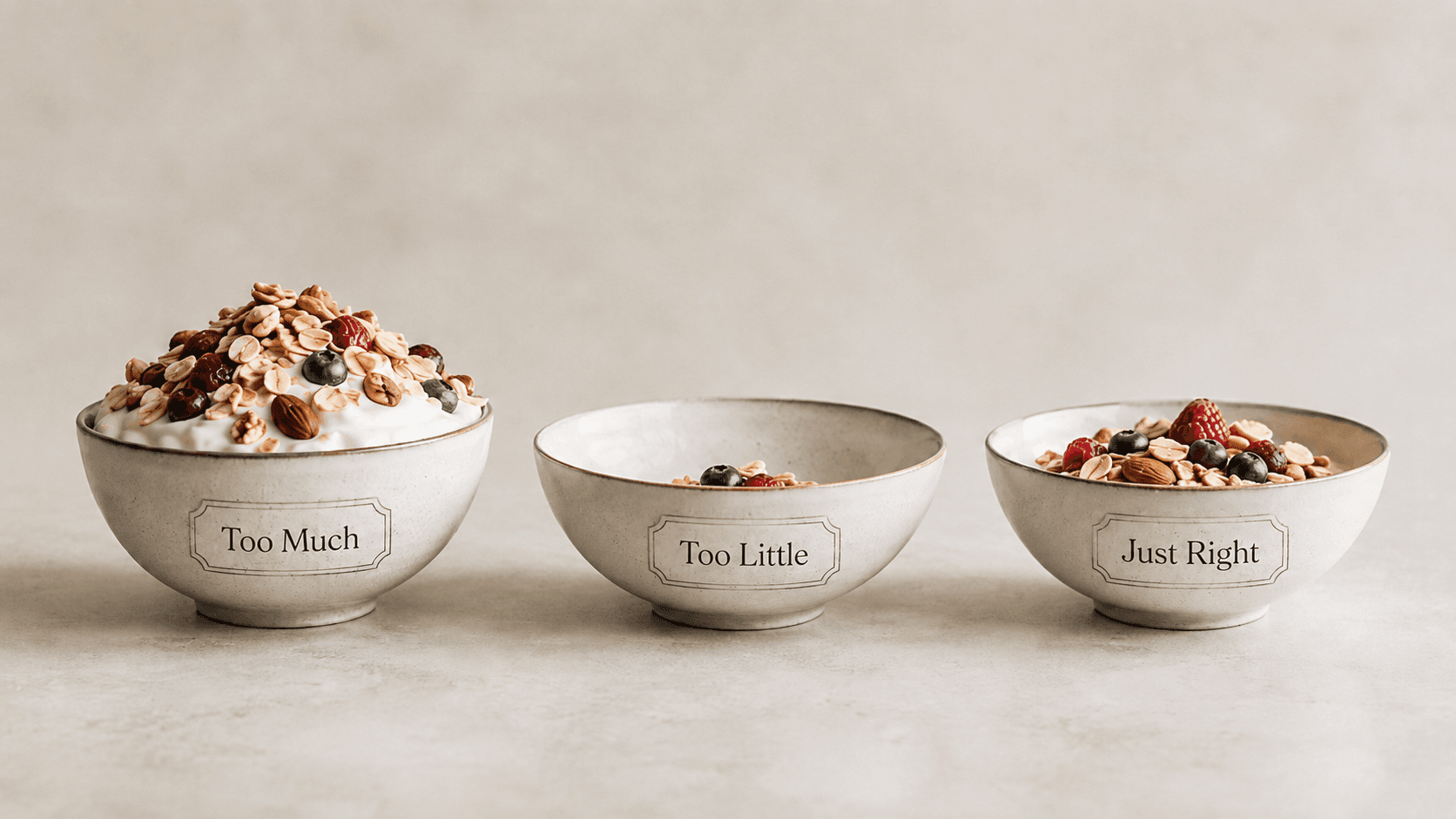
Choice is rarely all or nothing
When people struggle with weight, eating or another persistent pattern, the language of choice can quickly become moralized.
If change is possible, we may assume the person should simply do it. If change is difficult, we may conclude that motivation is lacking. On the other side, an emphasis on biology or environment can sometimes sound as though individual action does not matter at all.
Neither position captures the full picture.
Our behaviour is shaped by forces we did not choose: genetics, early learning, stress, sleep, health, medication, relationships, culture, income and the environments in which we live. These factors influence appetite, reward, energy, attention and the options available to us.
But influence is not the same as complete determination.
The more useful question is not, “Do we have free will?” It is:
Where, under these particular conditions, is there meaningful room for action?
Our capacity to choose changes with context
Choice is not a fixed personal trait. It expands and contracts.
A person who is rested, supported and adequately nourished may have a wider range of options than the same person after a sleepless night, a stressful day or a period of intense hunger. An environment filled with cues, convenient food and constant demands creates a different decision-making landscape than one built around routine and support.
This does not eliminate responsibility, but it changes how we understand it.
Self-regulation is not simply the ability to issue yourself instructions and obey them. It involves noticing what is happening, anticipating difficult situations, organizing the environment, tolerating discomfort, recovering after disruption and adjusting when a plan does not work.
In other words, effective choice often depends on preparation.
The limits of the moment
We tend to focus on the visible decision: whether someone eats the food, skips the walk or follows through with a plan.
But by the time that moment arrives, much of the outcome may already have been shaped.
How hungry is the person? What food is available? How much time do they have? What happened earlier in the day? Are they anxious, lonely, in pain or mentally depleted? Have they made similar decisions repeatedly for hours?
The immediate choice still matters. But it is only one point in a longer chain.
This suggests a different approach to change. Rather than asking only, “What should I choose right now?” we can also ask:
- What conditions make the desired choice more likely?
- Which situations repeatedly narrow my options?
- What can be decided in advance?
- Where do I need support rather than more pressure?
- How will I respond when the plan breaks down?
These questions move us away from blame and toward design.
Agency can be built
A sense of agency develops when people experience themselves as capable of influencing what happens next.
That influence may begin with small, unremarkable actions: preparing food before becoming overly hungry, arranging support, changing a route, setting a boundary, taking medication as prescribed, going to bed earlier, or returning to a routine after it has been interrupted.
None of these actions proves complete control. They do something more useful: they create evidence that behaviour is not entirely automatic.
Over time, small acts can alter habits, expectations and identity. A person begins to see that a lapse does not have to become a collapse, and that an imperfect plan can still be resumed.
This is one of the central tasks of self-regulation: not maintaining flawless control, but learning how to re-enter the process.
Treatment can change the choice landscape
Medical and psychological treatments can also alter the conditions under which choices are made.
A GLP-1 medication may reduce hunger or food preoccupation. Bariatric surgery may change appetite, capacity and eating patterns. Psychotherapy may increase awareness, emotional tolerance or behavioural flexibility. Practical support may make routines easier to sustain.
These interventions do not replace personal action. They change what action feels possible.
That distinction matters. People often judge themselves for failing to make choices that were, in practice, extremely difficult under the conditions they were living in. When the conditions change, the same person may discover a capacity that was present but hard to access.
So, do we have a choice?
Yes—but not an unlimited one, and not the same amount in every moment.
We are neither completely free of our biology and history nor completely defined by them. We act within constraints, and some constraints are far more powerful than others.
The purpose of recognizing choice is not to assign blame. It is to locate leverage.
Where can the environment be changed? What can be prepared in advance? What support is needed? Which expectations are unrealistic? What is the smallest action that would widen the range of options available next time?
Meaningful change often begins there—not with a dramatic declaration, but with a more accurate understanding of the conditions in which choice becomes possible.